General Purpose Gloves - CoatedMaxiFlex® Ultimate™34-874
Cut Resistant GlovesMaxiFlex® Cut™34-8743
Extended Use Disposable GlovesGrippaz™ Engage67-307
Safety HelmetsTraverse™280-HP1491RVM
Safety HelmetsKilimanjaro™280-HP642R-CH
Hi Performance GloveBoss®9916
Arc Protection KitsPIP®9150-52436
Safety HelmetsTraverse™280-HP1491RM
Hi Performance GloveBoss® XtremeKS993KOAB
Protection From ColdG-Tek® PolyKor®41-8035
Extended Use Disposable GlovesGrippaz™ Skins67-246
Hi-Vis Cold GearPIP®343-1756

Caiman® Kontour™Comfortable Welding Gloves

The Importance of Providing Proper Fitting PPE For Women
 (3).jpg)
Revolutionizing Safety with GORE-TEX Pyrad® for Unmatched Arc-Rated PPE Comfort

INTERACTIVE CROSS REFERENCE

THE INDUSTRY'S MOST COMPREHENSIVE OFFERING OF COLD WEATHER PPE

Bouton® FogLess® 3Sixty™ Technology

Essential PPE for Contamination Control in High-Sensitivity Manufacturing Environments

G-Tek® Paradox™Ultra-Lightweight 21G Technology

JSP Force Typhoon™ 8 Twin Filter Half Masks with PressToCheck™

ATA Fiber Technology Strength Meets Comfort

PUMA® SAFETY SHOESHIGH-PERFORMANCE SAFETY FOOTWEAR

BioSoft™ THE WORLD'S FIRST SUSTAINABLE BIO-BASED EAR PLUGS

THE BROADEST LINE OF TYPE II HEAD PROTECTION

Bisley® X-Airflow™Breathable Safety Garments

Hand Protection

PPE For Emergency Responders

INTERACTIVE CROSS REFERENCE

THORZT™ RAPID REHYDRATIONFor the Industrial Athlete
SAFETY IN A FLASHEflare™ Warning Beacons

G-Tek® VRX™ ADVANCED PROTECTION

DISASTER RELIEF PPEEssential Protection for Rescue and Recovery Teams

HALF MASK RESPIRATORS REVOLUTIONARY FORCE TYPHOON™8

Kut Gard® ATA® PreventWear™ Cut Resistant Garments

HAND AND ARM PAIRING GUIDE

ON-SITE PPE ASSESSMENT

Understanding the Main Differences in Welding JacketsLeather vs. FR Cotton (Q&A)

BOSS® FOOTWEARAdvanced Protection & Comfort

How the New ANSI/ASSP Heat Stress Standard is Intensifying Workplace Safety

Bouton OpticalAdvanced Lens Technologies in Safety Eyewear™

4 HIDDEN JOBSITE RISKS And How To Avoid Them

ARC-RATED PYRAD FABRIC TECHNOLOGY BY GORE-TEX LABS

ON-SITE PPE ASSESSMENT

MAKE THE SWAPSustainable Hearing Protection that Doesn't Break the Bank
THE CUT PROTECTION EVOLUTIONWhy It’s Time to Upgrade to A4-A6 Gloves

Barrier Solutions for Clean and Efficient EV Battery Production

Head Protection

COMPARING ADVANCED HEAD PROTECTION SOLUTIONS

PPE For Emergency Responders

Heated Apparel For Cold Climates

THROUGH THE WRINGERHow Industrial Launderable Workwear Stands Up to Mining and Oil & Gas

G-TEK® POSIGRIP MAXLess Effort, More Control.

PIP® WEAR TRIALS

vSeries™ Ear Muffs

WELDING SAFETY SELECTOR GUIDE

3SP ONLINE TRAINING

BisleyPREMIUM EXTREME COLD WORKWEAR

Natural Disaster Relief PPE EXPECT THE UNEXPECTED

MADE-TO-ORDER SLEEVES Custom Options for Enhanced Performance

ADVANCED HEAD PROTECTION EQUIPMENTfor Safer Construction Sites

ON-SITE PPE ASSESSMENT

THORZT™Hydration Solutions Formulation

DISASTER RELIEF PPEEssential Protection for Rescue and Recovery Teams

NOVAX ELECTRICAL SAFETYNot All Gloves Are Created Equal

DISASTER RELIEF PPEEssential Protection for Rescue and Recovery Teams

CONTROLLED ENVIRONMENT SELECTOR GUIDE

3SP ONLINE TRAINING

CUSTOM LOGO SERVICES FAST, EASY & PRECISE

EYE PROTECTION SELECTOR GUIDE
THE HERITAGE LINEPUMA® SAFETY SHOES

Protective Clothing

The Food & Drug Administration (FDA) controls all the regulations related to items that are added to food (i.e. direct additives) and items that may come in contact with food (i.e. indirect additives). All gloves, apart from medical/exam type disposables are referenced in 21 CFR Parts 174 & 177 when used in food handling applications.
For our purposes, we only really need to concern ourselves with Parts 174 and 177. Before going further, it is important to clearly state that 21-CFR does not call out items such as “gloves”. The regulations reference only the raw materials that make up the “Components of a Food Contact Article”. Clearly, gloves, or sleeves for that matter, are often used as food contact articles. Part 174 references these articles as Indirect Food Additives. They are defined more clearly as: “Items that come into contact with food as part of packaging, holding, or processing, but are not intended to be added directly to, become a component, or have a technical effect in or on the food.”

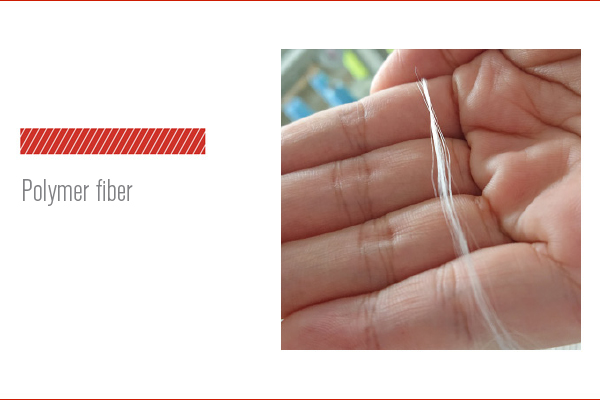
Part 177 outlines the specifications related to the item classified as “Polymers”. What do gloves, or sleeves have to do with polymers? Simple, all the gloves and sleeves that PIP recommends for food contact are synthetic and polymer-based — both the yarn and coating.
So, when we claim that a glove meets 21-CFR-177, it means that the raw material manufacturer of the yarn and, if coated, the resin manufacturer of the coating, meets the very detailed specifications outlined by FDA 21-CFR-177. Care to see an example? Click here to view the detailed specifications for nylon fiber used in many general-purpose gloves.
Ok, so we’ve established that the 21 CFR part 174 and part 177 are clearly about what is defined as “Indirect Food Additives” and the specifications of the raw materials used in producing gloves or sleeves that come in contact with food during the manufacturing or handling process.

We consider that there are three types of food contact:
1. Direct contact substances are those that directly contact food.
2. Substances that might come in contact with food, such as on the outside of food bag or carton, are defined as indirect contact.
3. Incidental food contact are items that rarely contact food and the contact is not purposeful or continuous. For example, food that contacts an extraneous part of a food processing machine, where contact is not expected, is considered incidental.

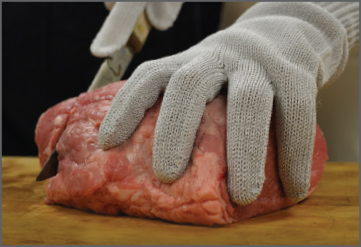
It is important to consider the specific application when recommending alternatives. For example, while technically possible to use the G-Tek® 16-X570, which is classified as meeting 21-CFR-177, to debone meat, it is unlikely a butcher would opt for a black coated glove. A more common practice is to use an uncoated, high cut resistant glove and overlay or underlay with a disposable glove for maximum protection, impermeability, and hygiene.
Below is a guide to help you find the optimal 21-CFR glove or sleeve for the job:
Direct Contact in Food Processing for handling, mixing and preparing foods: Polymer Gloves
Direct Contact in Food Processing for butchering meats, de-boning fish or slicing vegetables (can be laundered and sanitized): High Cut Resistant Uncoated Knit Gloves
Direct Contact in Food Processing for butchering meats, de-boning fish or slicing vegetables (can be laundered and sanitized): High Cut Resistant Sleeves
Direct Contact in Food Processing and Food Service: Powder Free Disposable Gloves
Indirect Contact in Food Plants for MRO applications or sorting and boxing packaged food: Coat Seamless Knit General-Purpose Gloves
Indirect Contact in Food Plants – for MRO applications or sorting and boxing glass packaged food: Seamless Knit Cut Resistant Gloves
PIP® Wins the 2025 OH&S Industrial Hygiene Award for G-Tek® Paradox™ 21-Gauge Cut Resistant Gloves
PIP® is thrilled to announce that we have been named a 2025 Occupational Health & Safety (OH&S) Industrial Hygiene Award winner in the Hand Protection: Cut/Puncture category for the NEW G-Tek® …
READ MOREChoosing the Right Gloves for Automotive Manufacturing and Aftermarket Environments
In the fast-paced world of automotive manufacturing and aftermarket services, hands are the most valuable tools. Whether assembling intricate vehicle components on production lines, performing maintenanc…
READ MOREThrough the Wringer: How Industrial Launderable Workwear Stands Up to Mining and Oil & Gas
In 2025, the mining and oil & gas industries continue to play a critical role in global energy production and resource extraction. With increasing demand for raw materials and energy, companies are p…
READ MOREProposition 65 | Privacy Policy | Contact Us | Full Site
© 2012-2025 Protective Industrial Products, Inc. All rights reserved.
CALL US TODAY: (518) 861-0133
CUSTOMER SERVICE DIRECT: (855) 284-6800