General Purpose Gloves - CoatedMaxiFlex® Ultimate™34-874
Cut Resistant GlovesMaxiFlex® Cut™34-8743
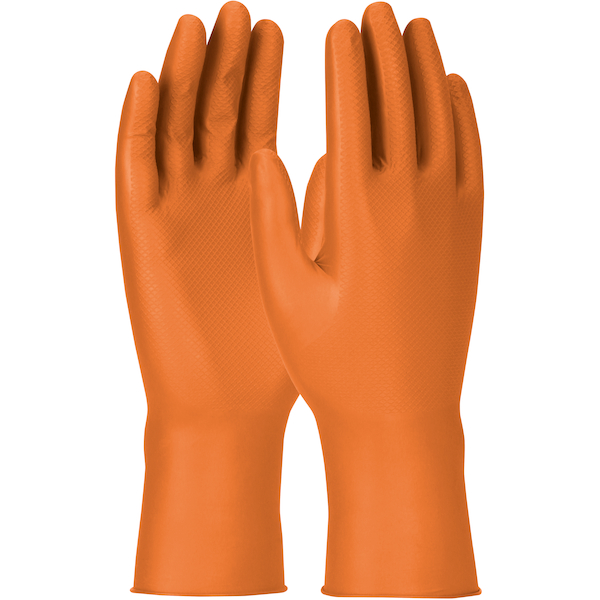
Extended Use Disposable GlovesGrippaz™ Engage67-307
Safety HelmetsTraverse™280-HP1491RVM
Safety HelmetsKilimanjaro™280-HP642R-CH
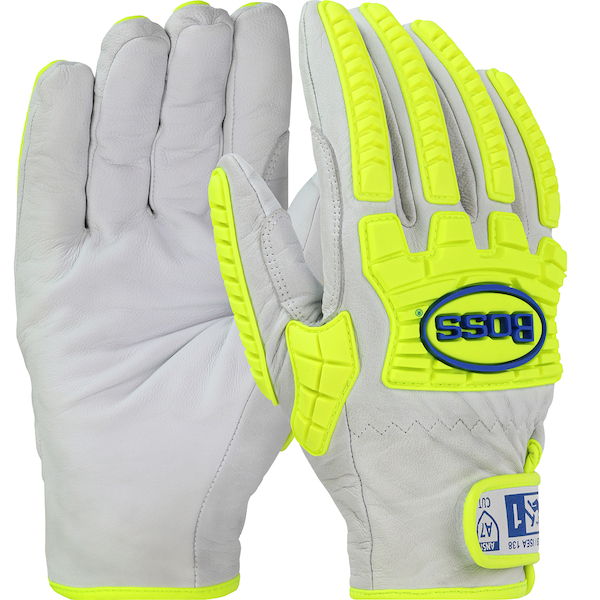
Hi Performance GloveBoss®9916
Arc Protection KitsPIP®9150-52436
Safety HelmetsTraverse™280-HP1491RM
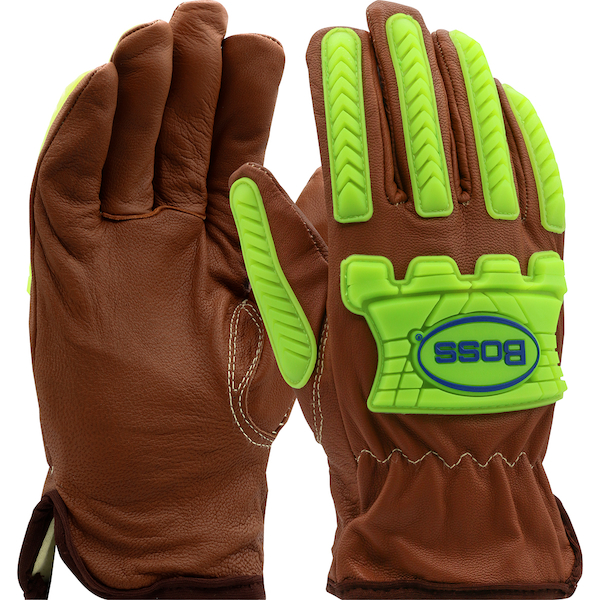
Hi Performance GloveBoss® XtremeKS993KOAB
Protection From ColdG-Tek® PolyKor®41-8035
Extended Use Disposable GlovesGrippaz™ Skins67-246
Hi-Vis Cold GearPIP®343-1756

Caiman® Kontour™Comfortable Welding Gloves

The Importance of Providing Proper Fitting PPE For Women
 (3).jpg)
Revolutionizing Safety with GORE-TEX Pyrad® for Unmatched Arc-Rated PPE Comfort

INTERACTIVE CROSS REFERENCE

THE INDUSTRY'S MOST COMPREHENSIVE OFFERING OF COLD WEATHER PPE

Bouton® FogLess® 3Sixty™ Technology

Essential PPE for Contamination Control in High-Sensitivity Manufacturing Environments

G-Tek® Paradox™Ultra-Lightweight 21G Technology

JSP Force Typhoon™ 8 Twin Filter Half Masks with PressToCheck™

ATA Fiber Technology Strength Meets Comfort

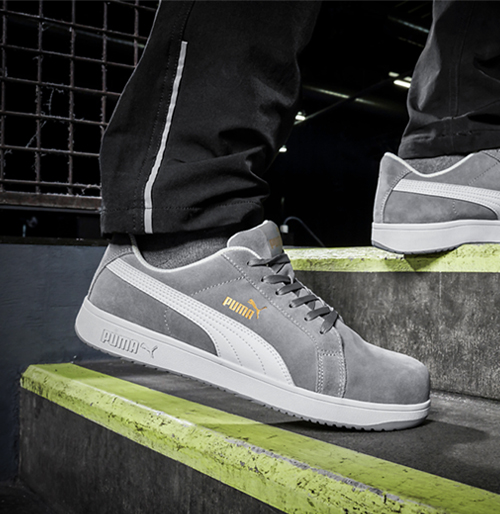
PUMA® SAFETY SHOESHIGH-PERFORMANCE SAFETY FOOTWEAR

BioSoft™ THE WORLD'S FIRST SUSTAINABLE BIO-BASED EAR PLUGS

THE BROADEST LINE OF TYPE II HEAD PROTECTION

Bisley® X-Airflow™Breathable Safety Garments

Hand Protection

PPE For Emergency Responders

INTERACTIVE CROSS REFERENCE

THORZT™ RAPID REHYDRATIONFor the Industrial Athlete
SAFETY IN A FLASHEflare™ Warning Beacons

G-Tek® VRX™ ADVANCED PROTECTION

DISASTER RELIEF PPEEssential Protection for Rescue and Recovery Teams

HALF MASK RESPIRATORS REVOLUTIONARY FORCE TYPHOON™8

Kut Gard® ATA® PreventWear™ Cut Resistant Garments

HAND AND ARM PAIRING GUIDE

ON-SITE PPE ASSESSMENT

Understanding the Main Differences in Welding JacketsLeather vs. FR Cotton (Q&A)

BOSS® FOOTWEARAdvanced Protection & Comfort

How the New ANSI/ASSP Heat Stress Standard is Intensifying Workplace Safety

Bouton OpticalAdvanced Lens Technologies in Safety Eyewear™

4 HIDDEN JOBSITE RISKS And How To Avoid Them

ARC-RATED PYRAD FABRIC TECHNOLOGY BY GORE-TEX LABS

ON-SITE PPE ASSESSMENT

MAKE THE SWAPSustainable Hearing Protection that Doesn't Break the Bank
THE CUT PROTECTION EVOLUTIONWhy It’s Time to Upgrade to A4-A6 Gloves

Barrier Solutions for Clean and Efficient EV Battery Production

Head Protection

COMPARING ADVANCED HEAD PROTECTION SOLUTIONS

PPE For Emergency Responders

Heated Apparel For Cold Climates

THROUGH THE WRINGERHow Industrial Launderable Workwear Stands Up to Mining and Oil & Gas

G-TEK® POSIGRIP MAXLess Effort, More Control.

PIP® WEAR TRIALS

vSeries™ Ear Muffs

WELDING SAFETY SELECTOR GUIDE

3SP ONLINE TRAINING

BisleyPREMIUM EXTREME COLD WORKWEAR

Natural Disaster Relief PPE EXPECT THE UNEXPECTED

MADE-TO-ORDER SLEEVES Custom Options for Enhanced Performance

ADVANCED HEAD PROTECTION EQUIPMENTfor Safer Construction Sites

ON-SITE PPE ASSESSMENT

THORZT™Hydration Solutions Formulation

DISASTER RELIEF PPEEssential Protection for Rescue and Recovery Teams

NOVAX ELECTRICAL SAFETYNot All Gloves Are Created Equal

DISASTER RELIEF PPEEssential Protection for Rescue and Recovery Teams

CONTROLLED ENVIRONMENT SELECTOR GUIDE

3SP ONLINE TRAINING

CUSTOM LOGO SERVICES FAST, EASY & PRECISE

EYE PROTECTION SELECTOR GUIDE
THE HERITAGE LINEPUMA® SAFETY SHOES

Protective Clothing

You might be asking yourself if double hearing protection is something you should be considering. In order to understand what double hearing protection is, let’s start by reviewing why it is needed. OSHA has Occupational Noise Exposure standards in the U.S. to protect general industry workers from experiencing hearing damage by regulating the amount of noise they’re exposed to on the job, requiring the implementation of a hearing conservation program and having administrative controls in place. For general industry applications including utility work, manufacturing work and service sector work, adhering to this OSHA standard can typically be achieved by using a single hearing protection device – be it ear muffs or ear plugs. This is because the attenuation of a singular hearing protection device is enough to ensure adequate hearing protection for the wearer. Double protection is necessary when the attenuation of a singular hearing protection device is not enough to ensure adequate hearing protection for the wearer.
SETTINGS WHERE DOUBLE HEARING PROTECTION IS NECESSARY
Let’s review a few situations where the protection from a single hearing device would be insufficient. According to the National Institute for Occupational Safety and Health, any worker whose 8-hour time-weighted average (TWA) exposure exceeds 100 dBA should wear double hearing protection. Double hearing protection is also required by OSHA in mining operations governed by the Mine Safety & Health Administration (MSHA) for noise exposures in excess of 105 dBA for an 8-hour time-weighted average (TWA).
CRACKING THE CODE ON DOUBLE HEARING PROTECTION
Now that we have identified a few situations that require the use of double hearing protection, let’s expand on what double hearing protection is. It’s simpler than you think: Double hearing protection occurs when two hearing protection devices are used at the same time. The dual or “double protection” factor is most commonly achieved by wearing ear muffs and ear plugs. A key element of ensuring you’re receiving the highest decibel (dB) protection when utilizing ear plugs as a part of your dual hearing protection is understanding the impact their fit has on effectiveness. To receive the highest protection, the ear plug must be worn properly. If not, the added dB from wearing dual protection may not be achieved.
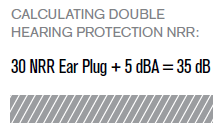
Wondering how double protection translates to a higher dB? All it takes is a simple calculation to determine what dB your double hearing protection is providing: Add 5 dBA to the highest Noise Reduction Rating (NRR) of the higher-rated hearing device. For example, if you are using an ear plug with a 30 NRR and an ear muff with a 26 NRR, you would add 5 dB to the 30 NRR for the ear plug. Your protection level would then increase to 35 dB, assuming the ear plug is worn properly. This simplified method of calculating double protection dBA is based on OSHA recommendations for doubling protection.
ARE THERE ANY DISADVANTAGES?
One downside to wearing double protection is that it may put the worker in harm’s way should the worker be unable to hear warning signs in their surrounding area. For this reason, double hearing protection should be carefully considered for certain worksites. Best practice is to use the right product to attain the comfort level and fit you need to be safe on the job without compromising your ability to be aware of your surroundings.
Noise-induced hearing loss is a common workplace injury that is 100% preventable. PIP® offers a complete line of hearing protection products that keep workers protected from loud working environments while achieving all-day comfort and optimal sound attenuation.
PIP® Wins the 2025 OH&S Industrial Hygiene Award for G-Tek® Paradox™ 21-Gauge Cut Resistant Gloves
PIP® is thrilled to announce that we have been named a 2025 Occupational Health & Safety (OH&S) Industrial Hygiene Award winner in the Hand Protection: Cut/Puncture category for the NEW G-Tek® …
READ MOREChoosing the Right Gloves for Automotive Manufacturing and Aftermarket Environments
In the fast-paced world of automotive manufacturing and aftermarket services, hands are the most valuable tools. Whether assembling intricate vehicle components on production lines, performing maintenanc…
READ MOREThrough the Wringer: How Industrial Launderable Workwear Stands Up to Mining and Oil & Gas
In 2025, the mining and oil & gas industries continue to play a critical role in global energy production and resource extraction. With increasing demand for raw materials and energy, companies are p…
READ MOREProposition 65 | Privacy Policy | Contact Us | Full Site
© 2012-2025 Protective Industrial Products, Inc. All rights reserved.
CALL US TODAY: (518) 861-0133
CUSTOMER SERVICE DIRECT: (855) 284-6800